5s
+1
Submission successful!

|
| Merknaam: | DLX |
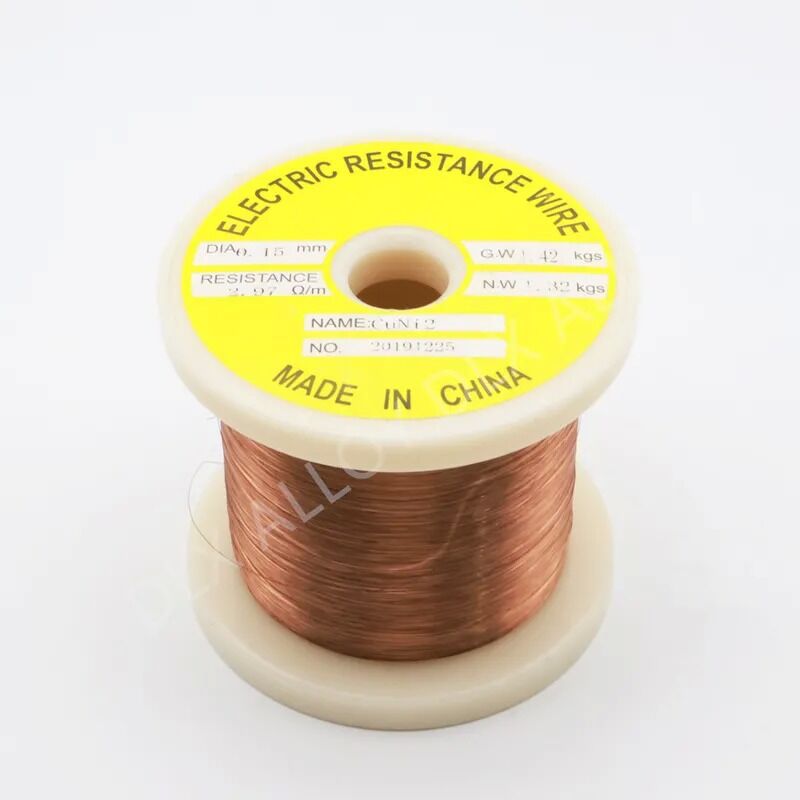
| Modelnummer: | CuNi2-draad |
| MOQ: | 10KG |
| Betalingsvoorwaarden: | L/C, D/A, D/P, T/T, Western Union |
| Leveringscapaciteit: | 500 ton per maand |
Nu de wereldwijde energiemarkt verschuift naar schonere, hernieuwbare bronnen, wint waterstof erkenning als een belangrijke speler in de decarbonisatie van industrieën, transport en energieopslag. Elektrolyse, een methode die elektriciteit gebruikt om water te splitsen in waterstof en zuurstof, staat aan de frontlinie van deze waterstofrevolutie. Om optimale prestaties en efficiëntie te garanderen, vereisen geavanceerde elektrolysesystemen hoogwaardige, duurzame materialen. CuNi2 koper-nikkeldraad onderscheidt zich als een van de beste materialen voor deze toepassingen, en biedt een perfecte balans tussen elektrische geleidbaarheid, corrosiebestendigheid en thermische stabiliteit.
CuNi2 koper-nikkeldraad is een legering die bestaat uit 98% koper en 2% nikkel. Deze combinatie levert de optimale eigenschappen van beide metalen: de uitstekende elektrische geleidbaarheid van koper en de corrosiebestendigheid en thermische stabiliteit van nikkel. Deze kenmerken maken CuNi2 draad een ideale keuze voor waterstofelektrolysesystemen, waar elektrische efficiëntie, duurzaamheid en langdurige prestaties cruciaal zijn.
Tijdens het elektrolyseproces wordt elektrische stroom door water geleid om het te splitsen in waterstof (H2) en zuurstof (O2). CuNi2 draad dient als weerstandselement in elektrolysecellen, waarbij elektrische energie efficiënt wordt overgedragen en tegelijkertijd de zware omstandigheden van zowel alkalische als PEM (Proton Exchange Membrane) elektrolyse wordt weerstaan. Door CuNi2 draad te gebruiken, kunt u zorgen voor een hoog-efficiënte waterstofproductie, een lange levensduur van het systeem en lagere onderhoudskosten.
| Eigenschappen Materiaal | Weerstand 200c μΩ.m | Max. werktemperatuur (℃) | Treksterkte (Mpa) | Smeltpunt (℃) | Dichtheid (g/cm3) | TCR *10-6/℃ (20-600℃) | EMK vs Cu (μV/℃) (0-100℃) |
|---|---|---|---|---|---|---|---|
| CuNi1 | 0.03 | 200 | 210 | 1085 | 8.9 | <100 | -8 |
| CuNi2 | 0.05 | 200 | 220 | 1090 | 8.9 | <120 | -12 |
| CuNi6 | 0.1 | 220 | 250 | 1095 | 8.9 | <60 | -18 |
| CuNi8 | 0.12 | 250 | 270 | 1097 | 8.9 | <57 | -22 |
| CuNi10 | 0.15 | 250 | 290 | 1100 | 8.9 | <50 | -25 |
| CuNi14 | 0.2 | 300 | 310 | 1115 | 8.9 | <30 | -28 |
| CuNi19 | 0.25 | 300 | 340 | 1135 | 8.9 | <25 | -32 |
| CuNi23 | 0.3 | 300 | 350 | 1150 | 8.9 | <16 | -34 |
| CuNi30 | 0.35 | 350 | 400 | 1170 | 8.9 | <10 | -37 |
| CuNi34 | 0.4 | 350 | 400 | 1180 | 8.9 | 0 | -39 |
| CuNi44 | 0.5 | 400 | 420 | 1200 | 8.9 | <-6 | -43 |
Waterstof wint aanzienlijk aan belang in de transitie naar schone energie vanwege zijn potentieel om moeilijk te elektrificeren sectoren zoals transport, industriële processen en energieopslag te decarboniseren. De vraag naar groene waterstof—waterstof geproduceerd via elektrolyse aangedreven door hernieuwbare energiebronnen—groeit snel naarmate landen werken aan het bereiken van netto-nul emissies tegen 2050.
De wereldwijde focus op schone energie stimuleert investeringen in elektrolysetechnologie als een belangrijke methode voor het produceren van waterstof zonder broeikasgasemissies. Naarmate de markt voor groene waterstof groeit, wordt de behoefte aan efficiënte, duurzame en schaalbare elektrolysesystemen steeds kritischer. CuNi2 koper-nikkeldraad is perfect geschikt om aan deze eisen te voldoen, en biedt een materiaal dat de systeemefficiëntie verbetert, onderhoud vermindert en kosteneffectieve waterstofproductie op schaal ondersteunt.


 english
 français
 Deutsch
 Italiano
 Русский
 Español
 português
 Nederlandse
 ελληνικά
 日本語
日本語
 한국
한국
 中文
中文
 العربية
 हिन्दी
 Türkçe
 indonesia
 tiếng Việt
 ไทย
ไทย
 বাংলা
বাংলা
 فارسی
فارسی
 polski